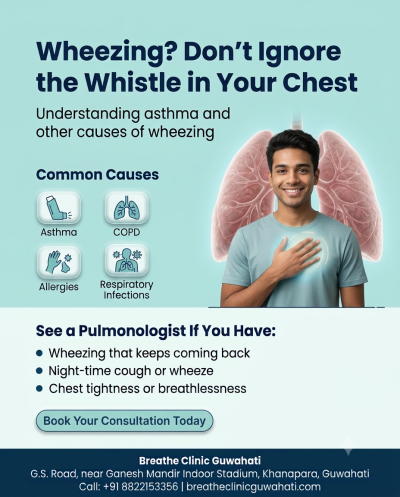
Wheezing Understanding Asthma & Other Causes
That Whistling Sound When You Breathe Is Worth Listening To
Most of us have heard it at some point: a faint whistle or squeak coming from the chest, usually when breathing out. Some people notice it only during a cold. Others hear it at night, after climbing stairs, or when the weather changes. Because it often comes and goes, wheezing is easy to brush aside. But it is your airways telling you they have become narrowed or inflamed, and the reason behind it deserves a proper answer.
What Exactly Is Wheezing?
Wheezing is a high-pitched, whistling sound produced when air squeezes through airways that have become narrow. The narrowing can happen because the airway walls are swollen, because there is extra mucus inside, or because the surrounding muscles have tightened. Wheezing is a symptom, not a disease in itself, which is why finding the cause matters more than treating the sound.
Common Causes of Wheezing
Asthma
This is the most common cause. In asthma, the airways are sensitive and react to triggers such as dust, pollen, smoke, cold air, strong smells, or exercise. Wheezing in asthma often worsens at night or early morning and is usually accompanied by cough or chest tightness.
COPD
In people who have smoked or been exposed to smoke and pollutants for years, wheezing can be a sign of chronic obstructive pulmonary disease, along with a long-standing cough and breathlessness.
Allergies
Allergic reactions can inflame the airways and trigger wheezing, especially during seasonal changes or after exposure to dust mites, mold, or pet dander.
Respiratory Infections
Bronchitis and viral infections can cause temporary wheezing. In young children, infections are a very common reason for a wheezy chest.
Other Causes
Acid reflux, vocal cord problems, heart conditions, and something lodged in the airway can also produce wheezing-like sounds. This is one reason why persistent wheezing should not be self-diagnosed.
When Should Wheezing Not Be Ignored?
A single mild wheeze during a cold may settle on its own. But you should consider consulting a pulmonologist if you notice:
- Wheezing that keeps coming back or lasts more than a couple of weeks
- Cough or chest tightness along with the wheeze
- Breathlessness during routine activities
- Waking up at night with cough or wheezing
- Frequent use of a rescue inhaler
- Recurrent wheezing in a child
Seek urgent medical care if wheezing comes with severe difficulty breathing, bluish lips, difficulty speaking in full sentences, or after a sting, food, or medicine that may have triggered an allergic reaction.
How Do We Find the Cause?
Treating wheezing properly begins with understanding what is behind it. At Breathe Clinic, we use advanced diagnostic tools to look at how your airways are actually behaving.
Pulmonary Function Test (PFT)
A PFT measures how much air your lungs can hold and how fast you can breathe it out. It helps identify airway narrowing and tell conditions like asthma and COPD apart.
FeNO Test
The FeNO test measures inflammation inside the airways. It is simple, painless, and especially helpful in confirming asthma-related inflammation and guiding treatment.
What Can You Do to Manage Wheezing?
✔ Note down when the wheezing happens, such as at night, during exercise, or around certain places or smells.
✔ Avoid known triggers like smoke, dust, and strong fumes.
✔ Keep your home clean and well ventilated.
✔ Use prescribed inhalers exactly as advised, even when you feel better.
✔ Do not rely on home remedies or leftover medicines for repeated wheezing.
✔ Get a proper lung evaluation rather than waiting for it to pass.
Frequently Asked Questions
Is wheezing always a sign of asthma?
No. Asthma is the most common cause, but COPD, allergies, infections, reflux, and heart or airway problems can also cause wheezing. A proper evaluation helps find the actual reason.
Why does my wheezing get worse at night?
Airways tend to be more sensitive during the night and early morning, which is why asthma symptoms often feel stronger then.
Can children outgrow wheezing?
Some children wheeze only during infections and improve as they grow, but others have asthma. Recurrent wheezing in a child should always be evaluated.
How long does a PFT test take?
Most Pulmonary Function Tests are completed within 15–20 minutes.
Is the FeNO test painful?
No. It is completely non-invasive and only requires you to breathe into a device.
When should I consult a pulmonologist?
If wheezing is recurrent, happens at night, or comes with cough, chest tightness, or breathlessness, it is advisable to seek professional evaluation.
Conclusion
Don't Ignore the Whistle in Your Chest
Wheezing is your body's way of signalling that something is affecting your airways. With the right tests and timely treatment, most causes can be identified and controlled, helping you breathe easier and sleep better.
Book Your Consultation Today
If you or a loved one are experiencing wheezing or breathing difficulty, our respiratory specialists are here to help.
Breathe Clinic Guwahati G.S. Road, near Ganesh Mandir Indoor Stadium, Khanapara, Guwahati +91 8822153356
